
Bold lines, vivid colours, and iconic imagery. Traditional tattoos — also called old school or American traditional — are the style that started it all, built to last a lifetime.

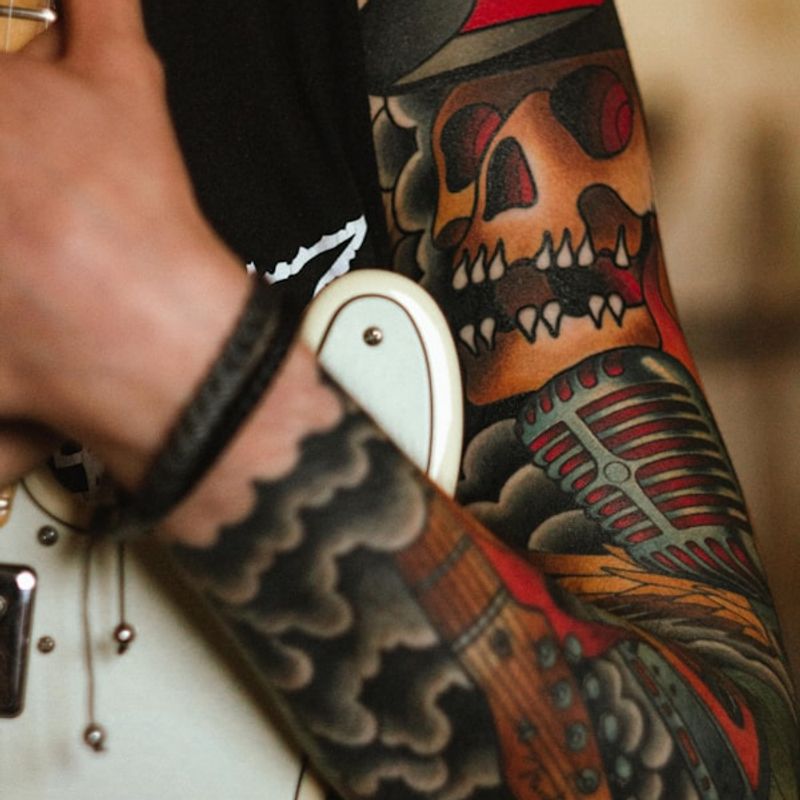
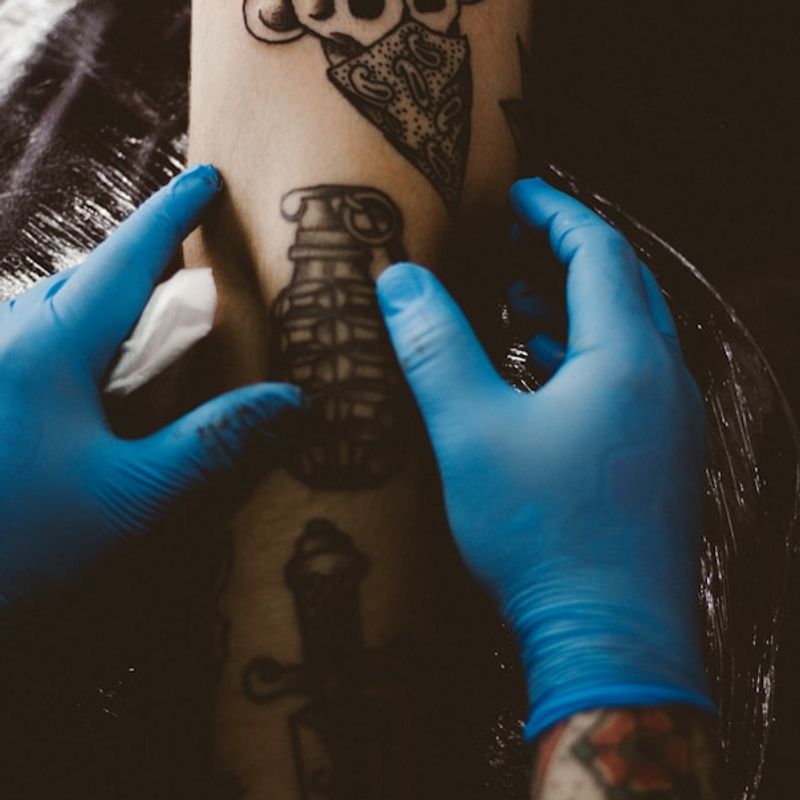
A traditional tattoo is a style defined by bold black outlines, a limited colour palette of red, green, yellow, and black, and flat colour fills without gradients. Rooted in early 20th-century sailor culture and popularised by legends like Norman “Sailor Jerry” Collins and Don Ed Hardy, traditional tattoos are among the most recognisable and enduring styles in the world.
What makes traditional tattoos special is their graphic simplicity. Every design is built to read instantly from across a room — no fine detail, no subtle shading, just clean shapes and strong contrast. This isn’t a limitation; it’s the reason traditional tattoos age better than almost any other style.
Traditional tattoos share a set of unmistakable visual traits. First, bold black outlines — thick, graphic lines that form the skeleton of every design. These outlines are load-bearing: they hold the tattoo together as skin ages and ink shifts over decades. Second, flat colour fills applied as solid blocks without blending or gradients. Third, a restricted palette of primary colours — red, yellow, green, blue, and black — chosen because these pigments hold their vibrancy on skin far longer than pastels or mixed tones.
The imagery is equally distinctive. Traditional designs favour iconic, instantly recognisable subjects: anchors, eagles, roses, daggers, skulls, swallows, ships, hearts, panthers, snakes, and pin-up figures. Each carries cultural meaning rooted in maritime and military history.
Anchors symbolise stability and a connection to home — originally worn by sailors as a reminder of safe harbour. Eagles represent freedom, power, and American identity, typically depicted with wings spread and talons extended. Roses are the most versatile motif in traditional tattooing, representing love, beauty, and the duality of pleasure and pain — sailors got them to acknowledge the people they left behind at sea.
Swallows carry one of the most specific meanings: traditionally, each swallow represented 5,000 nautical miles sailed. Daggers stand for strength, danger, and sacrifice. Skulls acknowledge mortality and rebellion. Panthers, snakes, and ships round out the classic repertoire — each subject chosen not just for aesthetics but for the story it tells.
Traditional tattoos work best on areas with a large, relatively flat canvas. The upper arm and outer shoulder are the most popular placements — the natural curve of the shoulder complements bold designs, pain is moderate, and these areas age exceptionally well with minimal sun exposure. Forearms are ideal for medium pieces like anchors, roses, and daggers, with the added benefit of being one of the least painful areas.
The chest provides a broad, flat surface for statement pieces — eagles and large compositions shine here. Thighs and outer legs offer significant canvas with very low pain. Back pieces give traditional designs room to achieve their full visual impact. Avoid hands, fingers, feet, and joints for traditional work — high movement and friction cause faster fading, and the skin texture doesn’t support the style’s bold lines.
Yes — traditional tattoos are widely regarded as the best-ageing style in tattooing. The bold outlines maintain definition even after decades of skin changes. Flat colour fills fade uniformly rather than in uneven patches. The high saturation of pigment means there’s significant colour remaining even after substantial fading. And because the designs don’t rely on fine detail or subtle shading, they remain legible as iconic shapes for a lifetime.
In the first five years, a traditional tattoo remains vibrant with minimal change. Between five and ten years, some colour saturation softens while black outlines stay crisp. After ten to twenty years, bold outlines may blur slightly and colours mute — but many people find this vintage patina appealing. Sun protection is the single most important factor for longevity. Touch-ups every 10–15 years can refresh colours and sharpen lines.
Look for artists who specialise in traditional work and can show a consistent portfolio of bold, clean pieces. Flash sheets are a strong signal — an artist who paints quality flash understands tattoo-ready design at a fundamental level. Ask about their training and apprenticeship background; traditional tattooing has a lineage culture where skills are passed down through mentorship.
Evaluate their portfolio for consistency across multiple pieces — clean outlines, saturated fills, and designs that read clearly from a distance. Red flags include inconsistent quality, poor photo documentation, no clear traditional focus, or dismissiveness toward flash and traditional conventions. A good traditional artist will discuss design, placement, and sizing with you before picking up the machine.
€150–€400
€400–€900
€900–€3,000+
Browse thousands of designs and book top artists on Inkjin.



Privacy is important to us, so you have the option of disabling certain types of cookies that may not be necessary for the basic functioning of the website. Blocking cookies may impact your experience on the website.
Accept all cookies
These items are required to enable basic website functionality.
These items are used to deliver advertising that is more relevant to you and your interests.
These items allow the website to remember choices you make to give you better functionality and personal features.
These items help the website operator understand how its website performs, how visitors interact with the site, and whether there may be technical issues.