
Bold outlines meet modern artistry. Neo-traditional tattoos blend the timeless structure of old school with expanded colour palettes, detailed shading, and contemporary subject matter — built to stand out and stand the test of time.
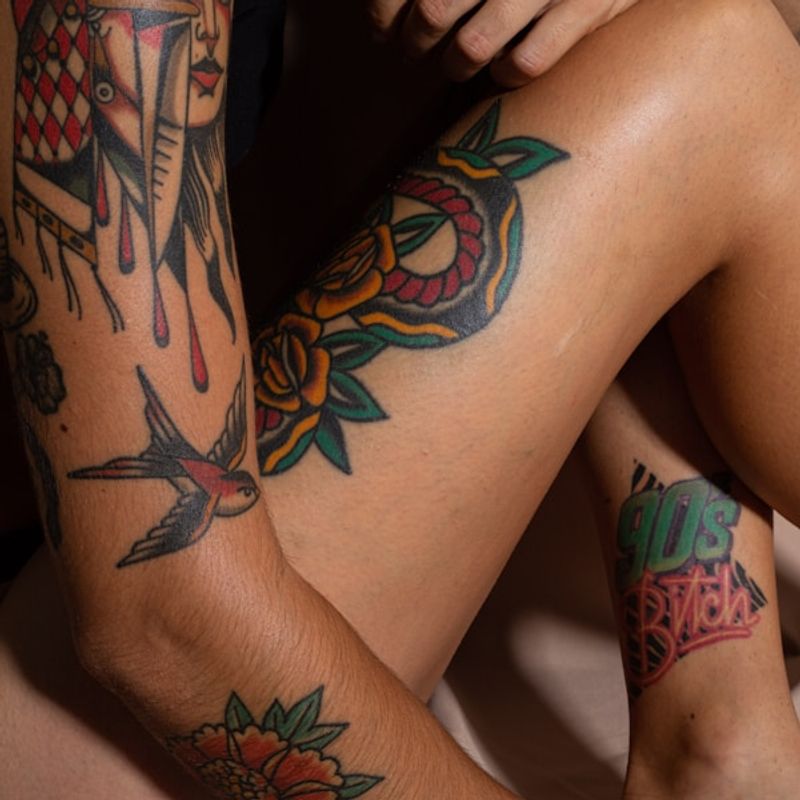


Neo-traditional is the natural evolution of old school tattooing. It takes the bold black outlines and strong compositions that made traditional tattoos iconic and pushes them further — adding gradient shading, an expanded colour palette, and more intricate detail work. The result is a style that feels both timeless and unmistakably modern.
Where traditional tattoos deliberately limit themselves to flat fills and primary colours, neo-traditional embraces complexity. You will see jewel tones, pastels, smooth colour transitions, and compositions that borrow from Art Nouveau, illustration, and even portraiture. But the foundation never changes: if the outlines are not bold and the design does not read from a distance, it is not neo-traditional.
Neo-traditional tattoos share a set of visual characteristics that separate them from both traditional and realism work. Bold black outlines remain the defining structural element — typically thicker than fine line but with more variation in weight than old school. Colour work goes well beyond the traditional palette, incorporating purples, teals, burnt oranges, soft pinks, and deep jewel tones with smooth gradient transitions rather than flat fills.
Shading in neo-traditional relies on whip shading and colour packing techniques to create depth and dimension that traditional tattoos intentionally avoid. Compositions tend to be more layered, often incorporating decorative elements like filigree, geometric accents, or mandala-inspired frames around a central subject. The overall effect is illustrative — closer to a painting or print than the graphic simplicity of old school.
Animals are arguably the most popular subject in neo-traditional tattooing. Wolves, foxes, bears, eagles, and snakes dominate portfolios, often rendered with ornamental framing and rich colour palettes. Floral work is equally common — roses, peonies, chrysanthemums, and dahlias rendered with depth and colour variation that traditional flat-fill roses cannot achieve.
Portraits and faces — from realistic human portraits to stylised mythological figures — are a neo-traditional specialty. Art Nouveau influences appear frequently, with flowing hair, decorative borders, and nature-inspired organic shapes. Other popular themes include skulls with ornamental detailing, daggers and swords with jewelled handles, moths and butterflies, and gothic or dark romantic imagery. The style is versatile enough to handle almost any subject as long as it is built on that bold-outline foundation.
Neo-traditional designs thrive on body areas that offer enough surface for detail and colour work. The upper arm and shoulder are the most popular placements — they provide a natural canvas for medium to large pieces and the relatively flat skin holds colour well. Forearms work beautifully for elongated compositions like daggers, snakes, or floral arrangements.
Thighs are increasingly popular, especially for larger pieces like animal portraits or multi-element compositions. Calves suit vertical designs and are a common choice for standalone neo-traditional pieces. Chest panels and back pieces allow for the most ambitious compositions — full scenes with multiple elements, extensive background work, and maximum colour impact. Avoid very small placements for neo-traditional; the style needs room for its detail and shading to breathe.
Neo-traditional tattoos are among the best-aging modern styles. The bold outlines serve as structural walls that keep colour contained and prevent the blurring that plagues styles without strong borders. Heavy colour saturation means fading is gradual and even, rather than the patchy fading that can affect lighter styles like watercolour or fine line work.
After 5–10 years, you can expect gradient shading to soften slightly and some colour vibrancy to mellow — but the overall design remains clean and legible. Lighter colours like yellows and light pinks will fade faster than deeper tones like reds, blues, and blacks. Sun protection is the single most important factor in longevity: consistent SPF 30+ application can extend the time between touch-ups by years. Most neo-traditional tattoos need their first touch-up around the 8–12 year mark.
Neo-traditional requires a specific skill set that not every tattoo artist possesses. You want someone who can pull consistent bold lines while also executing smooth colour gradients — that combination is harder than it looks. When reviewing portfolios, pay attention to line consistency (no wobbly outlines), colour saturation (no patchy fills), and smooth shading transitions. Ask to see healed photos, not just fresh work — fresh tattoos always look vibrant, but healed work reveals the artist’s true skill.
Many neo-traditional artists specialise in particular subjects — some excel at animals, others at portraits or florals. Match the artist’s strength to your design idea. Expect to book a consultation first, especially for custom work. Most established neo-traditional artists have 2–6 month waiting lists, so plan accordingly. Price-wise, neo-traditional typically commands a premium over traditional work due to the additional time required for detailed shading and colour blending.
€200–€500
€500–€1,200
€1,200–€4,000+
Browse thousands of designs and book top artists on Inkjin.



Privacy is important to us, so you have the option of disabling certain types of cookies that may not be necessary for the basic functioning of the website. Blocking cookies may impact your experience on the website.
Accept all cookies
These items are required to enable basic website functionality.
These items are used to deliver advertising that is more relevant to you and your interests.
These items allow the website to remember choices you make to give you better functionality and personal features.
These items help the website operator understand how its website performs, how visitors interact with the site, and whether there may be technical issues.