
Explore the art of Japanese tattoos (Irezumi) — from traditional motifs like koi, dragons, and cherry blossoms to placement, pricing, and finding the right artist.
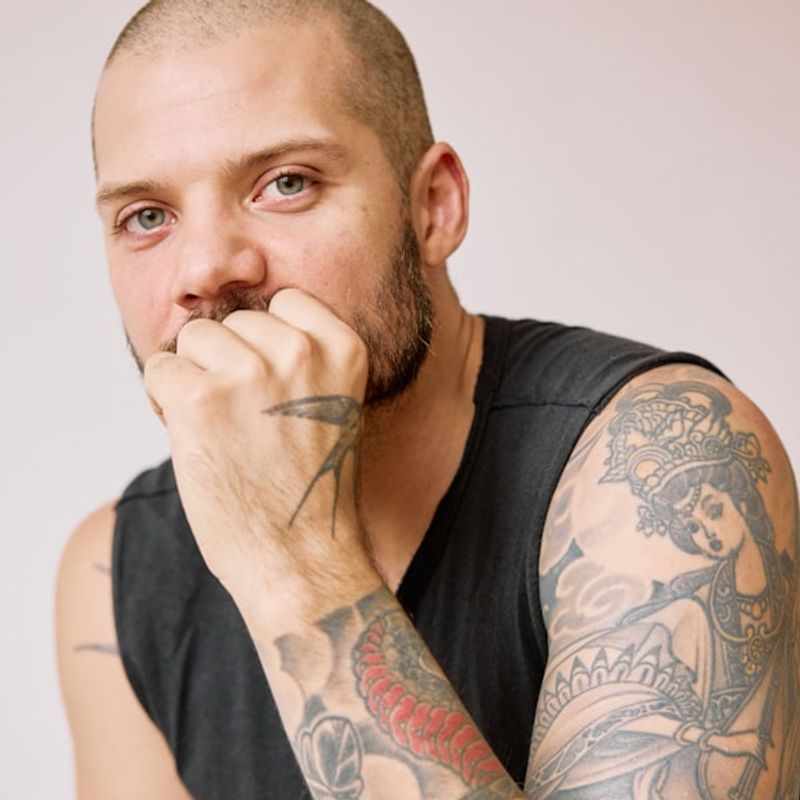
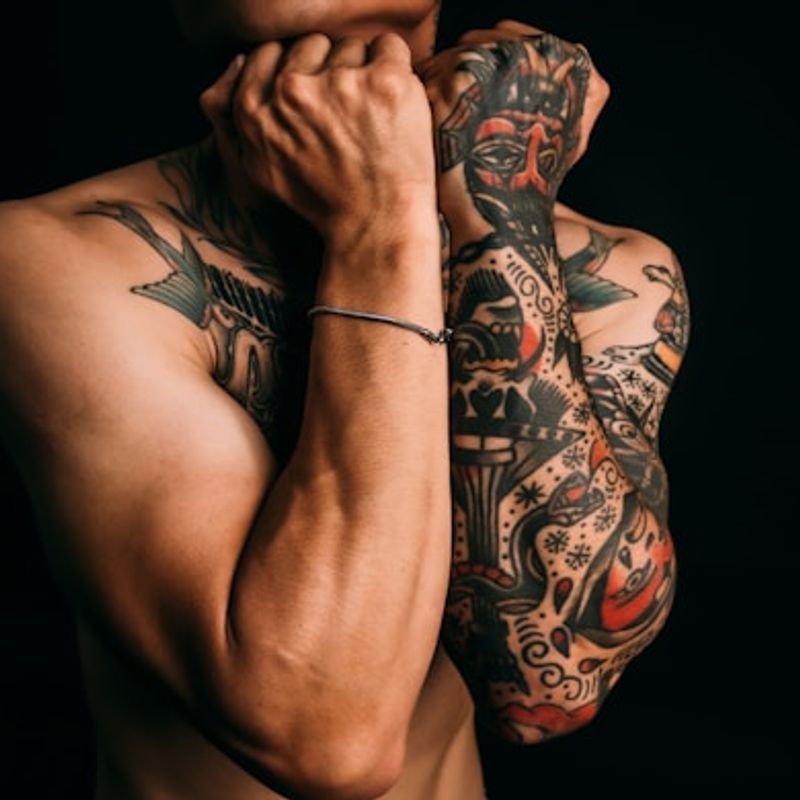
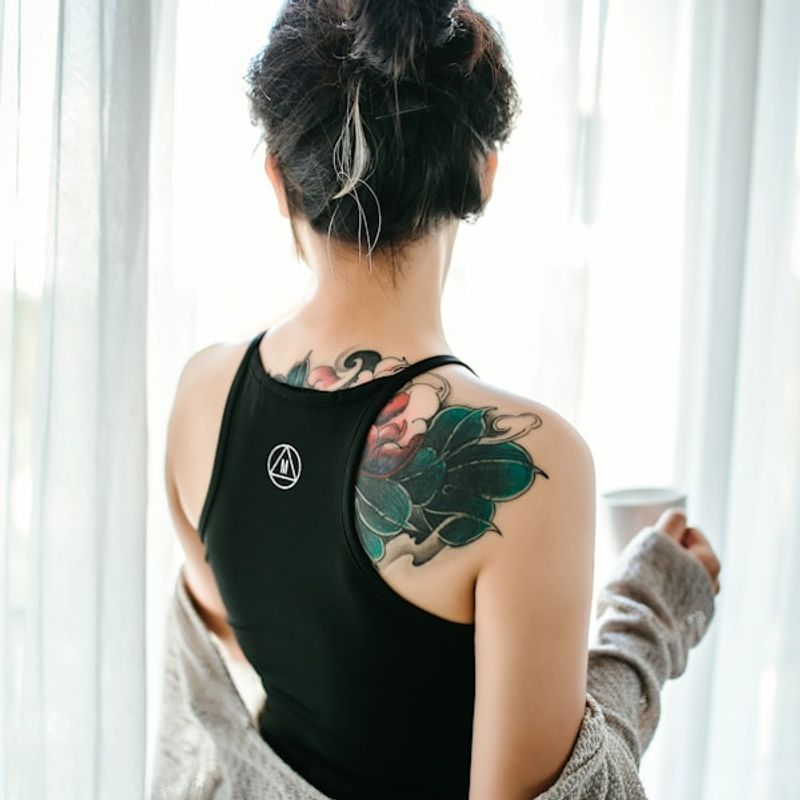
Japanese tattooing, known as Irezumi (入れ墨, literally "inserting ink"), is one of the oldest and most respected tattoo traditions in the world. Rooted in centuries of Japanese visual culture — from ukiyo-e woodblock prints to Buddhist iconography — Irezumi is defined by its bold outlines, saturated colour palettes, and narrative compositions that wrap around the body like wearable murals. Unlike Western styles that often treat the skin as a flat canvas, traditional Japanese work follows the body's natural contours, using negative space (known as nukibori background) and wind bars to create movement and flow.
Modern Irezumi artists bridge the gap between tebori (hand-poked technique using a wooden handle and bundled needles) and machine work, but the design grammar remains remarkably consistent: strict rules govern which motifs pair together, seasonal symbolism dictates colour choices, and background elements like clouds, waves, and rocks tie the composition into a unified bodysuit or panel. Whether you're planning a single sleeve or a full back piece, understanding these conventions is essential to getting authentic Japanese work that ages beautifully.
Irezumi is instantly recognisable by its bold black outlines (sujibori), flat colour fills layered with subtle gradients (bokashi shading), and compositions that treat the entire limb or torso as a single design field. Backgrounds are never an afterthought — wind bars, spiralling clouds, and crashing waves provide kinetic energy and connect the primary motifs into a cohesive narrative. The colour palette leans heavily on deep reds, indigo blues, jade greens, and rich blacks, often leaving strategic areas of bare skin to function as visual breathing room.
Compositional rules are strict. A dragon and a tiger can share a bodysuit because they represent opposing forces, but pairing a phoenix with a snake would break symbolic logic. Seasonal elements reinforce meaning: cherry blossoms (spring) accompany motifs about the fleeting nature of life, while maple leaves (autumn) pair with imagery about change and resilience. Artists trained in Irezumi conventions will guide you through these pairings — if your artist doesn't mention them, it's a red flag.
The koi fish (perseverance and ambition) is perhaps the most requested Japanese motif — swimming upstream it represents struggle, while a downstream koi suggests goals already achieved. Dragons (ryū) symbolise wisdom, protection, and the forces of nature, and are typically depicted with three or four claws winding through clouds. The phoenix (hō-ō) represents rebirth and virtue, while the foo dog (komainu) serves as a guardian figure. Hannya masks, depicting a jealous female demon, explore themes of passion and transformation and are among the most dramatically shaded pieces in the tradition.
Floral motifs carry equal weight. Peonies (the "king of flowers") signify wealth and bravery, chrysanthemums represent longevity and imperial authority, and lotus flowers speak to spiritual purity rising from muddy waters. Warriors and folklore figures — Fudō Myōō (the immovable wisdom king), samurai from the Suikoden epic, and Kintarō (the golden boy) — add narrative depth to larger compositions. Each motif exists in a visual vocabulary that experienced Irezumi artists spend years mastering.
Traditional Irezumi is designed around large body panels: the full sleeve (from shoulder to wrist), the hikae (chest panel extending to the upper arm), the full back piece (senaka), and the leg sleeve from hip to ankle. These placements allow the composition to flow with muscle groups, wrapping around joints rather than fighting them. A properly designed Japanese sleeve uses the inner bicep for background elements, places the primary motif on the outer arm where it's most visible, and transitions smoothly across the elbow with wave or cloud work.
Smaller standalone pieces — a koi on the forearm, a hannya on the calf, a chrysanthemum on the shoulder — work well but lose some of the compositional power that makes Irezumi distinctive. If you're starting small with plans to expand, discuss the long-term layout with your artist from day one. Many Irezumi artists will sketch the full composition before tattooing the first line, ensuring that future additions integrate seamlessly rather than becoming disconnected patches.
Japanese tattoos are among the longest-lasting styles because of their bold outlines and saturated colour packing. While fine-line work can blur within 5–8 years, a well-executed Irezumi piece retains its legibility for decades. The heavy black outlines act as structural walls that prevent colour migration, and the bokashi shading technique — applying ink in smooth gradients rather than stippled dots — creates tonal depth that ages gracefully. Touch-ups are rarely needed before the 10-year mark if aftercare is followed properly.
Pain levels are moderate to high, particularly on the ribs, inner arm, and knee ditch — areas that Japanese compositions frequently cover. Traditional tebori (hand-poking) is often described as more of a rhythmic scratching sensation compared to machine work, and some clients report faster healing. Sessions for large pieces typically run 3–5 hours, with a full sleeve requiring 30–50+ hours spread over months. Budget for the marathon, not the sprint: rushing an Irezumi piece defeats the purpose of the craft.
Look for artists who specialise in Japanese work — not generalists who "also do Japanese." A trained Irezumi artist will have a portfolio dominated by large-scale Japanese compositions, demonstrate mastery of bokashi shading, and understand motif pairing conventions. Many serious practitioners have apprenticed under a Japanese master (often adopting an artistic lineage name like Horitomo or Horikitsune). Ask about their training background; it's a respected conversation in this tradition, not an awkward question.
In Europe, established Irezumi artists are concentrated in major cities — London, Berlin, Amsterdam, Barcelona, and Milan all have dedicated Japanese tattoo studios. Expect wait lists of 3–12 months for top artists, and be prepared for a consultation where the artist may push back on your initial idea. This isn't ego — it's the artist protecting the integrity of the tradition. A good Irezumi artist will explain why certain motifs shouldn't be paired, suggest better placements, and present a custom drawing before any ink touches skin.
€150–€300
€400–€900
€1,500–€5,000+
Browse thousands of designs and book top artists on Inkjin.



Privacy is important to us, so you have the option of disabling certain types of cookies that may not be necessary for the basic functioning of the website. Blocking cookies may impact your experience on the website.
Accept all cookies
These items are required to enable basic website functionality.
These items are used to deliver advertising that is more relevant to you and your interests.
These items allow the website to remember choices you make to give you better functionality and personal features.
These items help the website operator understand how its website performs, how visitors interact with the site, and whether there may be technical issues.