
Explore the bold lines and rich cultural heritage of tribal tattoos. From Polynesian to Celtic patterns, discover styles, meanings, placements, and what to know before getting inked.
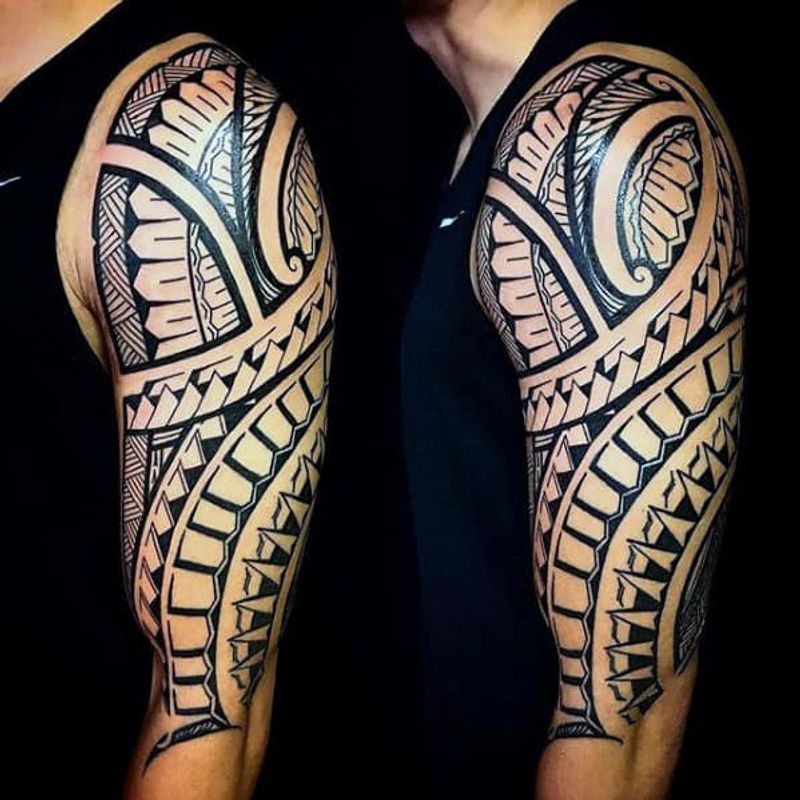
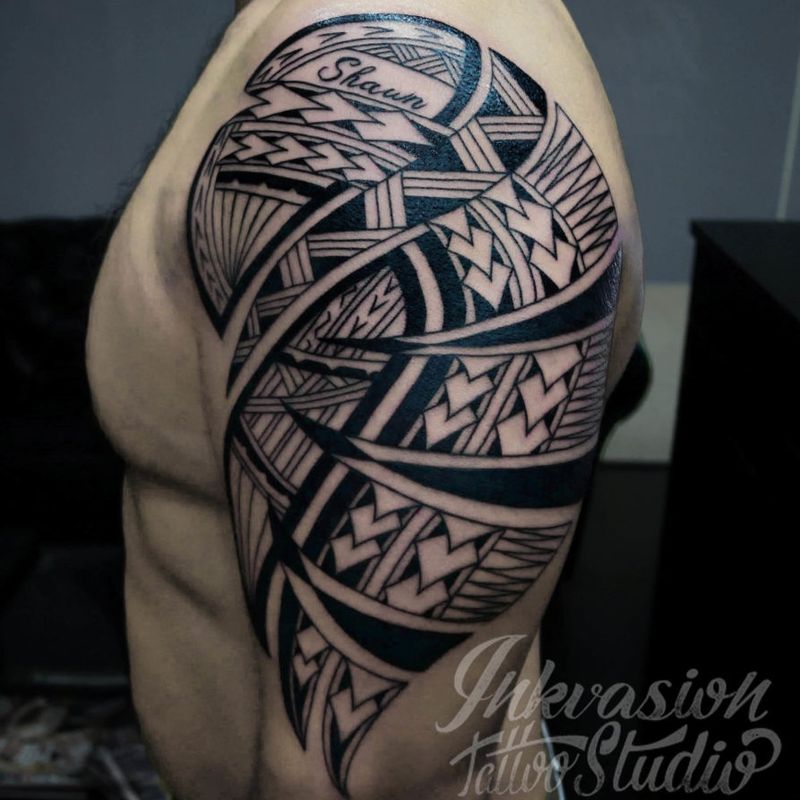
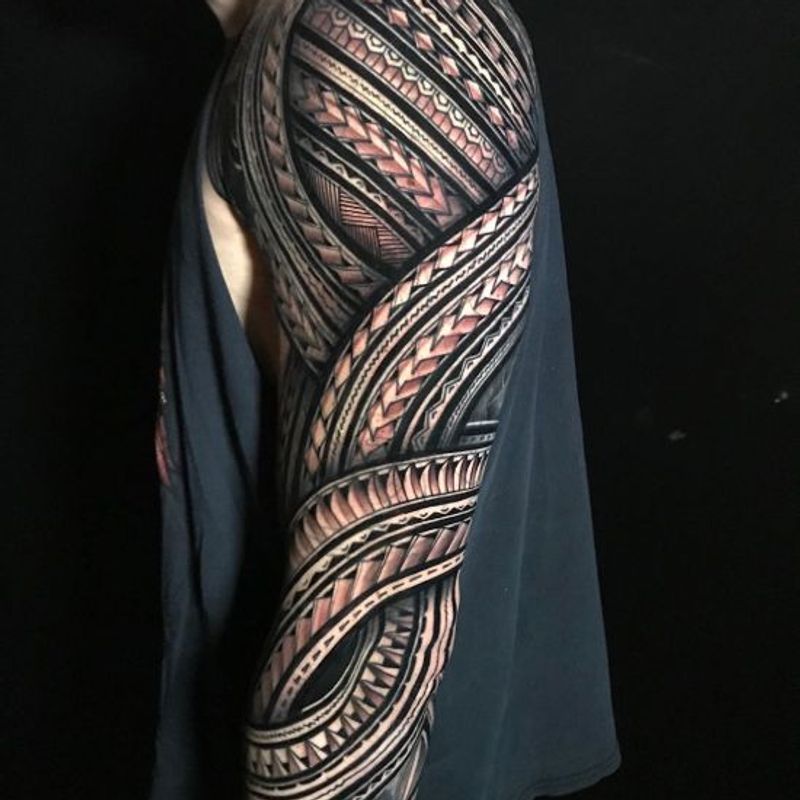
Tribal tattoos are among the oldest forms of body art on Earth, with roots stretching back thousands of years across Polynesia, Southeast Asia, Africa, and Europe. What began as sacred rites of passage, spiritual protection, and markers of social rank has evolved into one of the most recognisable tattoo styles worldwide. The defining feature is unmistakable: bold black lines flowing in rhythmic, interlocking patterns that follow the body's natural contours.
Despite going through waves of mainstream popularity — and occasional backlash for cultural appropriation — tribal tattooing has endured because the visual language is genuinely powerful. The contrast of heavy black against skin, the way patterns wrap around muscle and bone, and the graphic simplicity that reads from across a room all contribute to its lasting appeal. Whether you're drawn to authentic Polynesian motifs or modern abstract tribalism, understanding the tradition behind the art will help you get a piece that means something.
At its core, tribal tattooing is built on bold black linework, solid fills, and the deliberate use of negative space. Unlike realism or watercolour styles that rely on gradients and colour mixing, tribal work achieves its impact through high contrast and clean geometry. The patterns are typically symmetrical or follow organic flowing shapes — arrowheads, spirals, wave patterns, and interlocking bands that create visual movement across the skin.
Different cultural traditions have distinct visual signatures. Polynesian tribal (including Samoan, Hawaiian, and Marquesan) features dense geometric fills arranged in bands and panels. Maori ta moko uses curvilinear shapes with koru (spirals) representing new life and growth. Celtic tribal leans into knotwork — unbroken interlacing lines symbolising eternity. Haida and Pacific Northwest styles incorporate formline art with ovoid shapes and U-forms depicting animals and clan crests. Modern neo-tribal often borrows elements from multiple traditions, creating abstract compositions that prioritise aesthetics over cultural specificity.
Polynesian tribal remains the most requested subcategory, and for good reason — the vocabulary of symbols is vast and deeply meaningful. Shark teeth (niho mano) represent protection and guidance, ocean waves symbolise life's journey, spearheads denote courage in battle, and tiki figures ward off evil spirits. A skilled Polynesian tattoo artist can weave your personal story into these traditional motifs, creating a one-of-a-kind piece that reads as both culturally grounded and individually significant.
Celtic knotwork appeals to those with Northern European heritage or an affinity for intricate, puzzle-like designs. The Trinity knot (triquetra), Celtic cross, and tree of life are perennial favourites. Blackwork tribal — which strips away cultural specifics in favour of pure graphic impact — has surged in popularity alongside the broader blackwork movement. These pieces treat the body as a canvas for abstract compositions, often covering large areas with flowing shapes that emphasise musculature. Tribal animals (wolves, eagles, sharks, and dragons) translate the style's bold lines into figurative designs that carry both visual weight and personal symbolism.
Tribal designs are purpose-built to follow the body's anatomy, which makes placement critical to the final result. The upper arm and shoulder are the classic tribal canvas — the deltoid's rounded shape is perfect for cap designs, and patterns can flow naturally down the bicep into a half-sleeve. Full sleeves allow for elaborate Polynesian panel work that wraps 360 degrees. The chest and pectoral area work beautifully for symmetrical designs, and chest-to-shoulder compositions are among the most striking tribal layouts.
The back offers the largest uninterrupted canvas and suits tribal pieces that need room to breathe — full back Polynesian compositions or spine-following symmetrical designs look incredible at scale. Calves and forearms work well for band-style wraps and smaller standalone motifs. The ribcage is popular for vertical tribal pieces, though expect a more painful session. Avoid areas with heavy creasing (inner elbow, behind the knee) for detailed tribal work, as the constant folding will blur fine pattern details over time.
This is where tribal truly excels. The combination of thick outlines, solid black fills, and minimal fine detail means tribal tattoos are among the best-aging styles in existence. While fine-line tattoos can blur and fade within 5–10 years, a well-executed tribal piece will still look crisp after two or three decades. Black ink is the most stable pigment, holding its density far longer than colour inks that are prone to UV breakdown.
That said, longevity depends on execution quality and aftercare. Lines that are too thin for the style, inconsistent saturation in solid fills, or poor needle depth will all show problems as the tattoo settles. A properly saturated tribal piece requires the artist to pack ink densely and evenly — look for smooth, consistent black fills with no patchy areas or holidays (missed spots). Sun protection is the single biggest factor in long-term appearance: daily SPF 30+ on exposed tribal work will keep it looking sharp for decades.
Not every tattoo artist can execute tribal well, despite its apparent simplicity. The style demands precision in line consistency, flawless solid fills, and an understanding of how patterns interact with body anatomy. Look for artists whose portfolios show clean, even blackwork with no patchiness or wobbly lines. Healed photos are especially important — fresh tribal always looks good, but healed work reveals the true quality of an artist's technique.
If you want authentic cultural work — genuine Polynesian, Maori, or other indigenous designs — seek out artists from those traditions or who have trained under traditional practitioners. Tatau artists who specialise in Samoan hand-tap (tatau) technique offer the most authentic Polynesian experience, though machine-applied Polynesian designs are equally valid when designed by knowledgeable artists. For custom tribal, expect to pay for a full consultation where the artist studies your body shape and designs around your specific anatomy. Pre-drawn tribal flash rarely fits as well as custom work shaped to your build.
€100–€250
€250–€600
€600–€2,000+
Δες πώς θα φαίνεται στο σώμα σου με AR, πάρε εκτίμηση τιμής, ή βρες κορυφαίους καλλιτέχνες κοντά σου.
Ανακάλυψε χιλιάδες σχέδια και κλείσε ραντεβού με κορυφαίους καλλιτέχνες στο Inkjin.



Privacy is important to us, so you have the option of disabling certain types of cookies that may not be necessary for the basic functioning of the website. Blocking cookies may impact your experience on the website.
Accept all cookies
These items are required to enable basic website functionality.
These items are used to deliver advertising that is more relevant to you and your interests.
These items allow the website to remember choices you make to give you better functionality and personal features.
These items help the website operator understand how its website performs, how visitors interact with the site, and whether there may be technical issues.