
From Polynesian history to 90s mall flash, explore the oldest style in tattooing. Learn about cultural appropriation, fading, and the brutal reality of covering up heavy black ink.
Tribal tattoos are the oldest form of body art on Earth. Yet, somehow, they became the punchline of the 1990s. If you mention "tribal" today, half the room pictures a barbed-wire bicep band on a frat guy. The other half pictures intricate, deeply spiritual Polynesian patterns stretching across a warrior's chest. Both are called tribal. Only one commands respect.
What started as sacred rites of passage and spiritual armor evolved into mall-shop flash art, and is now experiencing a massive, authentic renaissance. The heavy black lines against bare skin are striking. The way the patterns wrap around muscle and bone is visually undeniable. But if you walk into a shop today asking for "something tribal" without knowing the history, you are setting yourself up for serious tattoo regret.
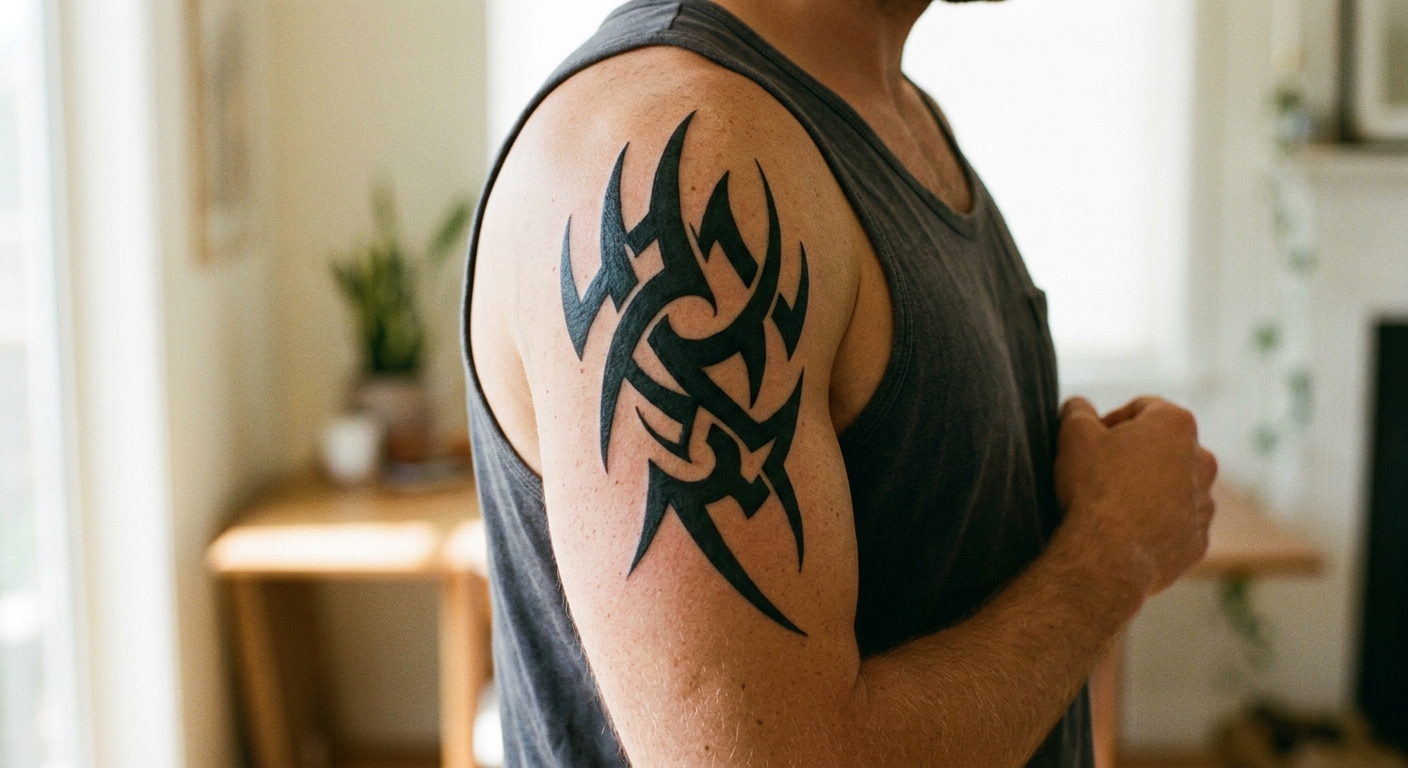
Let's clear the air immediately. The spiky, chaotic black shapes that dominated the late 90s and early 2000s are what the industry calls "neo-tribal" or "mall tribal." They mean absolutely nothing. They were drawn to look aggressive and cool. And for a while, they did. Now? They are the single most covered-up style of tattoo in existence.
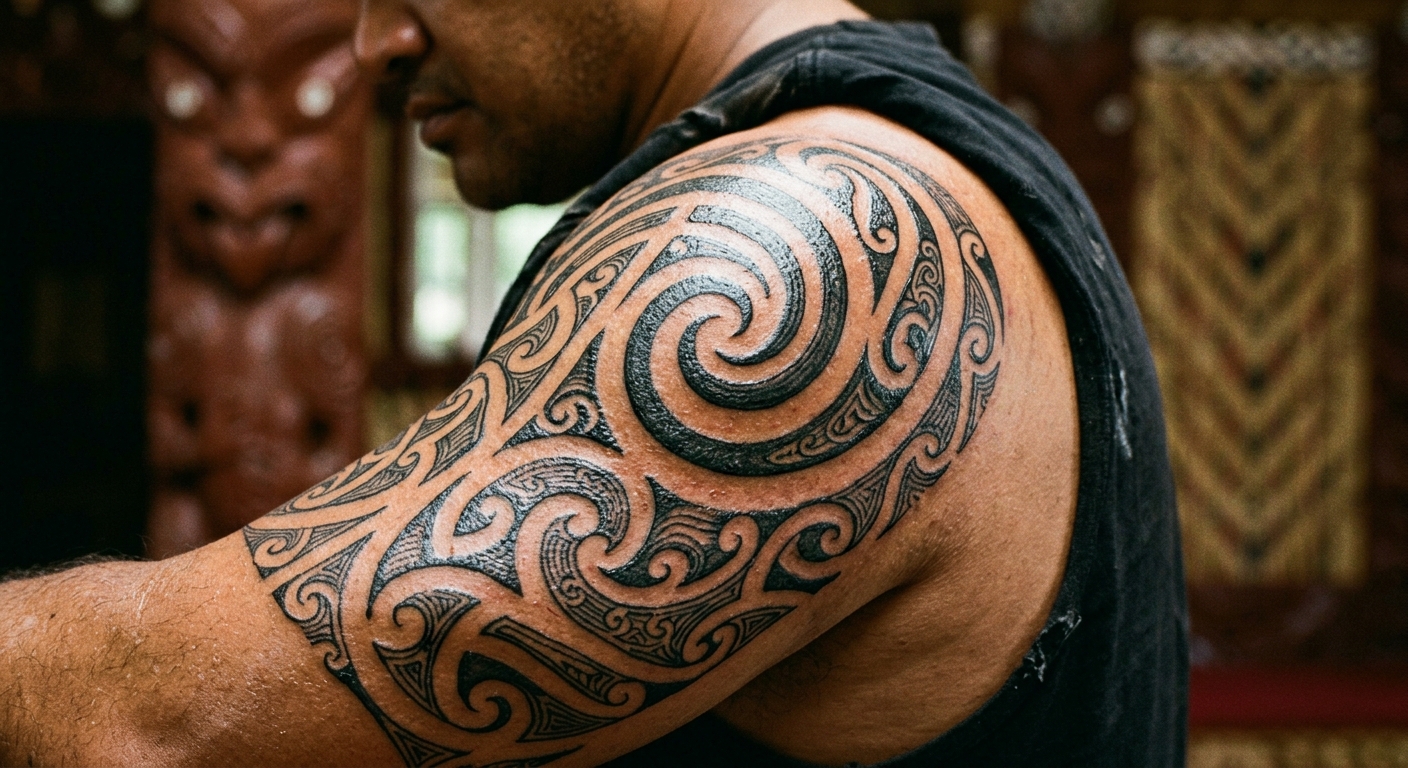
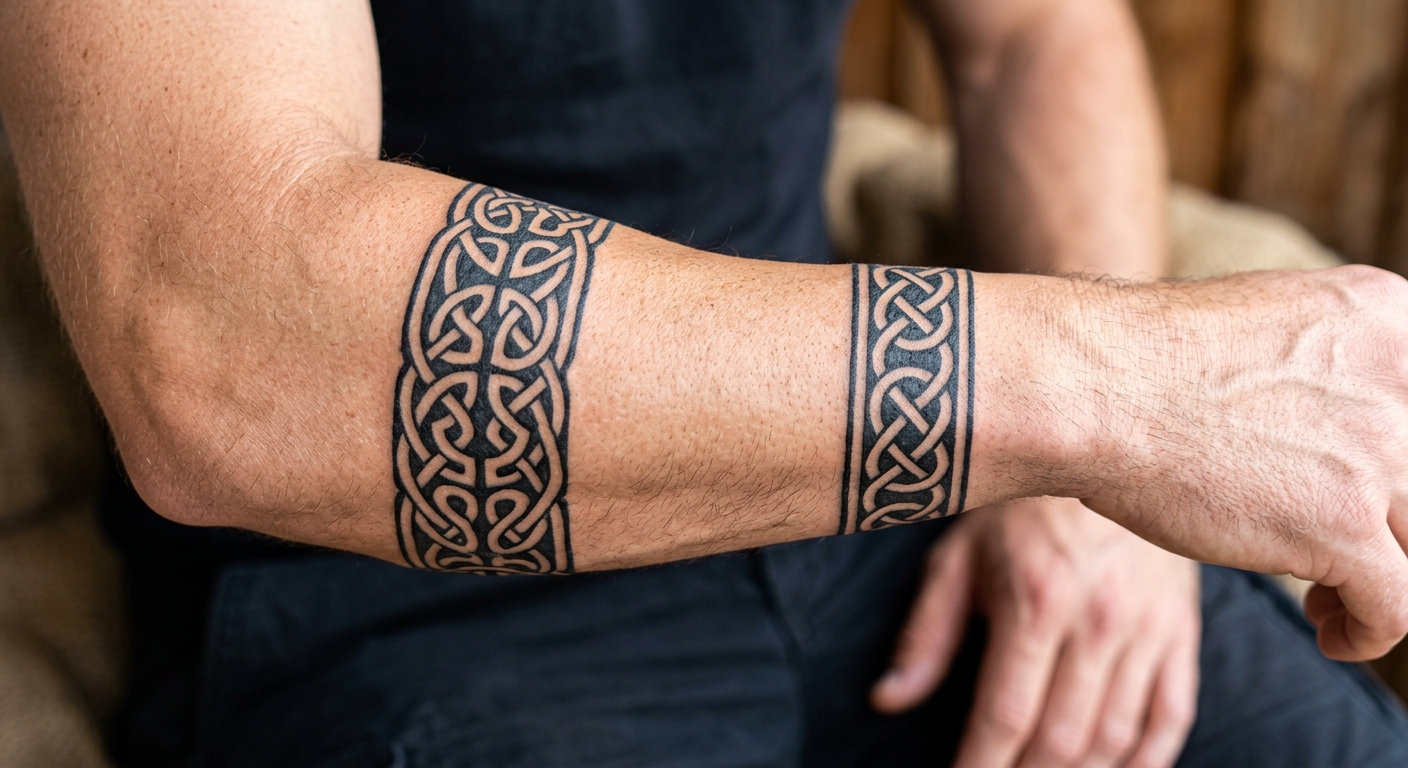
Authentic tribal is entirely different. It is deeply rooted in indigenous cultures. Polynesian (including Samoan, Hawaiian, and Marquesan) relies on dense geometric fills, shark teeth, and spearheads packed into structured bands. Maori ta moko is curvilinear, built around spirals that depict new life. Filipino tribal tells the story of a person's lineage and accomplishments. Celtic knotwork weaves unbreakable lines representing eternity. These are not random shapes. They are a visual language.
Can you get a tribal tattoo if you don't belong to the culture? It is the most common question artists get asked. The short answer: It depends entirely on the design.
Generic, abstract blackwork patterns? Nobody cares. Go for it. But specific cultural motifs—like a traditional Maori facial moko or a Samoan pe'a—carry ancestral weight. Getting one just because it "looks badass" is a quick way to disrespect the people who bled to earn those marks.
If you want an authentic cultural piece, find an artist who belongs to that tradition. A true specialist will design a piece that respects the heritage while telling your specific story, rather than just copy-pasting a sacred symbol onto your forearm.
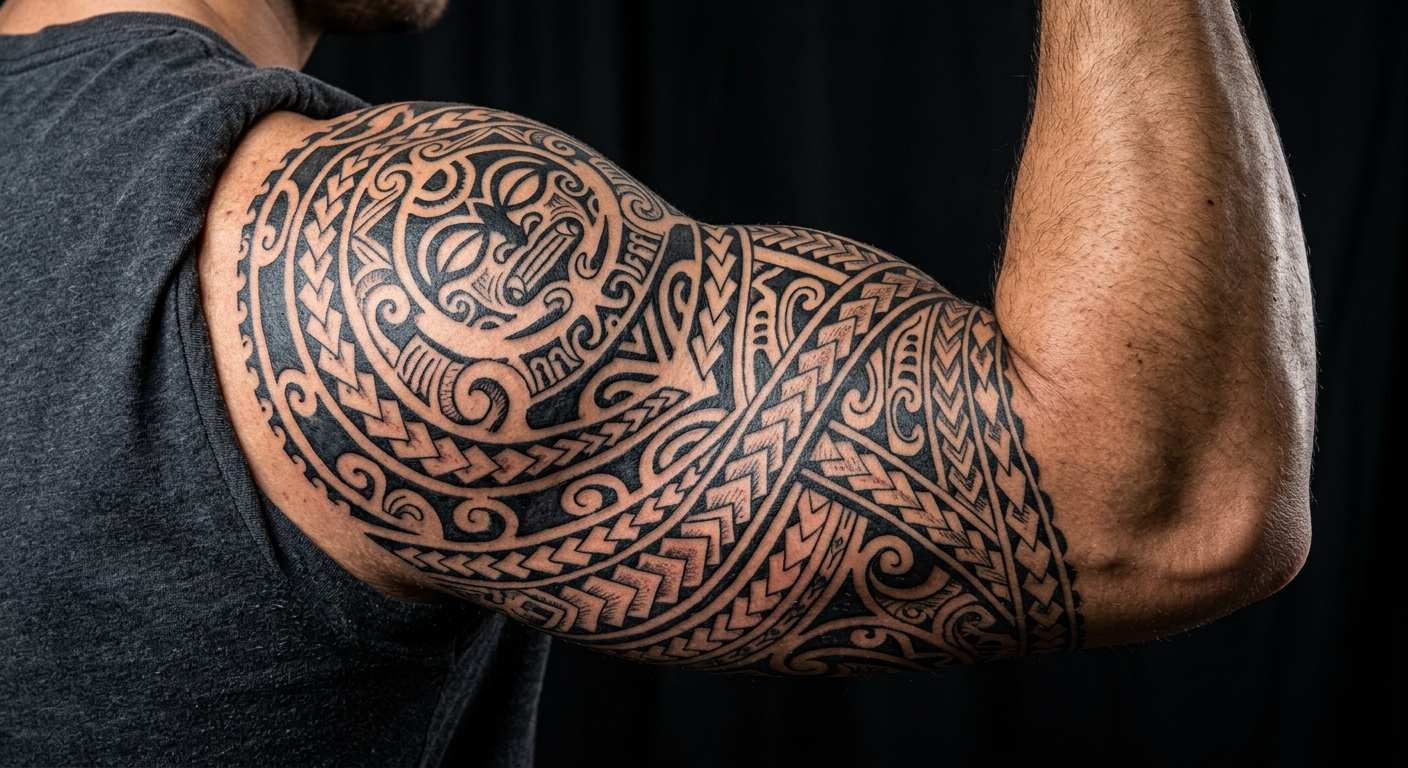
Because there is no shading or color to hide behind, tribal is ruthlessly unforgiving for a tattoo artist. Solid black fills must be exactly that—solid. If the artist doesn't pack the ink properly, it heals splotchy and gray. If they go too deep, the thick lines will blow out and turn into a blurry mess under the skin.
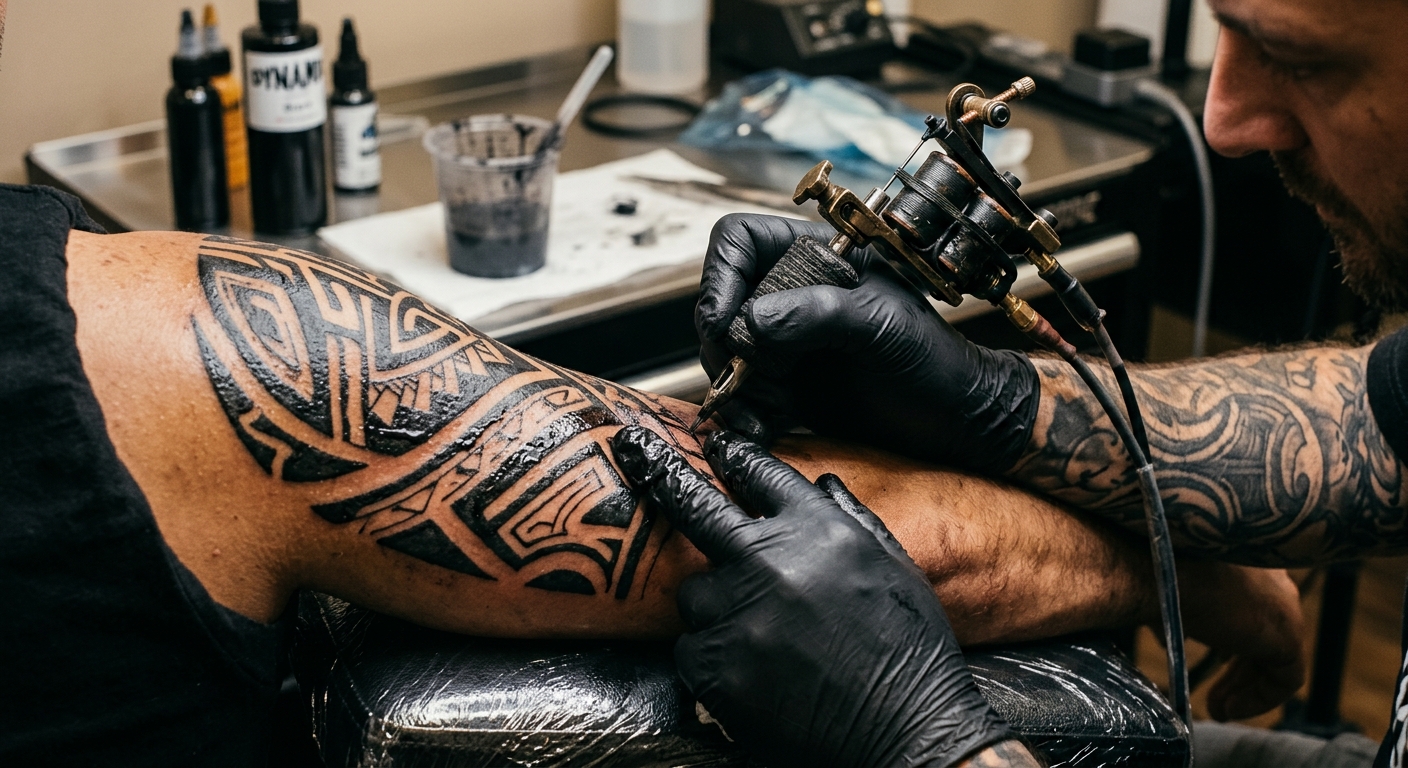
More importantly, tribal has to flow. A masterful tribal piece is drawn directly onto your body with a marker before the needle ever touches your skin. It has to follow the curve of your deltoid, the sweep of your calf, or the arch of your ribs. Pre-drawn tribal stencils printed off a computer almost never sit right on the human body. They look like stiff stickers. Custom flow is everything.
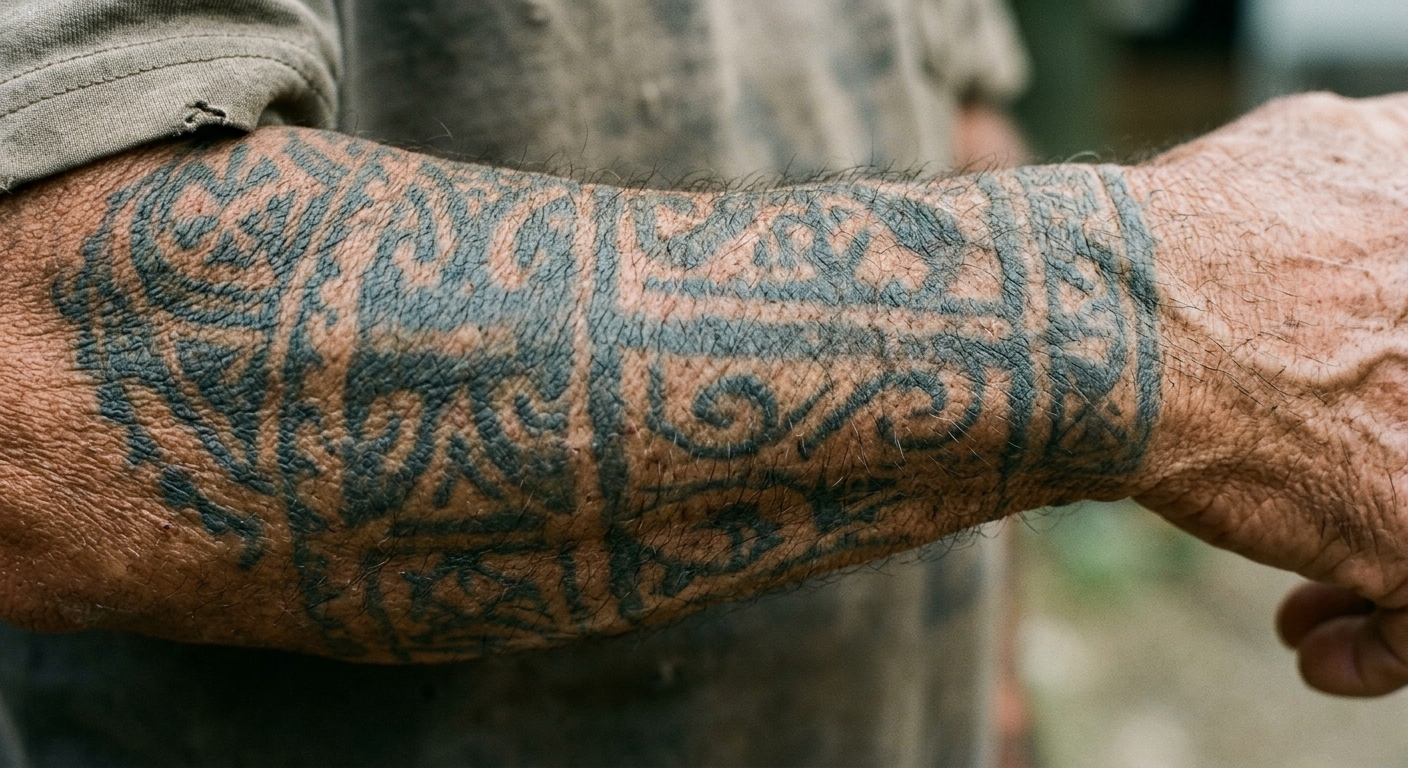
You will eventually look in the mirror and realize your jet-black tribal piece is now a soft, charcoal gray. Don't panic. This is how ink works.
Over five, ten, or twenty years, your body sheds millions of skin cells. The sun beats down on your arm. The crisp black ink settles deeper into the dermis. While fine-line tattoos might fade into oblivion, tribal tattoos simply soften. They actually age incredibly well because the lines are so thick that the design remains perfectly legible from across the street. If the gray bothers you after a decade, a quick touch-up session to pack fresh black ink will make it look brand new again.
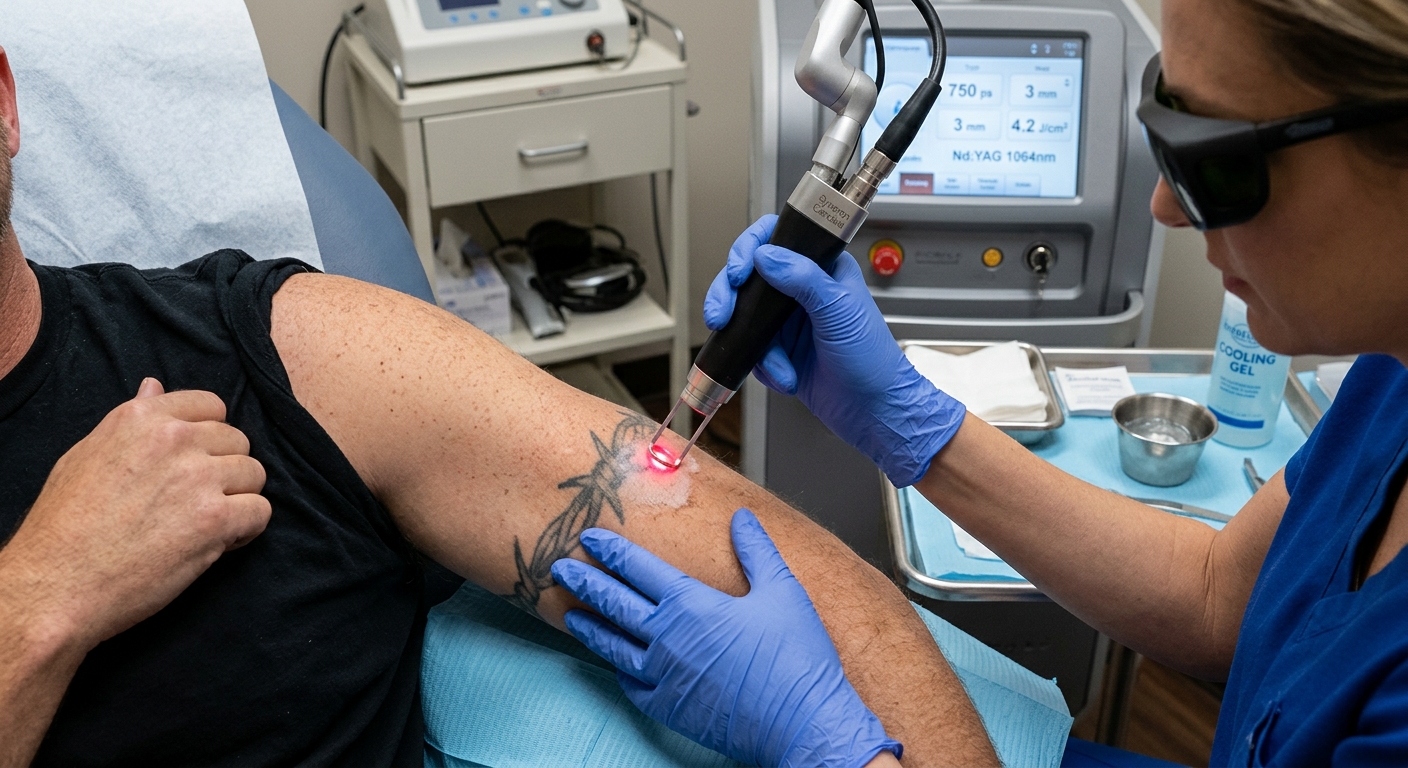
What if you are stuck with a 20-year-old tribal lower back piece that you absolutely hate? You have a tough road ahead.
Heavy black lines are the hardest thing in the world to cover. You cannot just slap a delicate watercolor flower over dense black ink. Your realistic options are limited to three paths. One: Heavy laser removal to lighten it enough for a standard cover-up. Two: A "blast over," where an artist tattoos heavy traditional or geometric shapes right over the old lines, using the old tribal as a chaotic background. Three: A blackout tattoo, where you simply surrender and ink the entire area solid black.
Rates vary significantly between tribal substyles and coverage.
| Project Size | Session Time | Estimated Cost |
|---|---|---|
| Small Tribal Band / Symbol | 1-2 hours | €100–€250 |
| Half-Sleeve / Chest Panel | 4-8 hours | €250–€600 |
| Full Sleeve / Back Piece | 15-30+ hours | €600–€2,000+ |
Prices vary by artist experience, location, and session length. Not sure how much to tip?
Browse thousands of designs and book top tribal artists on Inkjin.
Download the App


Privacy is important to us, so you have the option of disabling certain types of cookies that may not be necessary for the basic functioning of the website. Blocking cookies may impact your experience on the website.
Accept all cookies
These items are required to enable basic website functionality.
These items are used to deliver advertising that is more relevant to you and your interests.
These items allow the website to remember choices you make to give you better functionality and personal features.
These items help the website operator understand how its website performs, how visitors interact with the site, and whether there may be technical issues.