
A semicolon tattoo represents the choice to keep going. Born from mental health advocacy, this small but powerful symbol has become one of the most meaningful tattoos in the world — a permanent reminder that your story is not over.
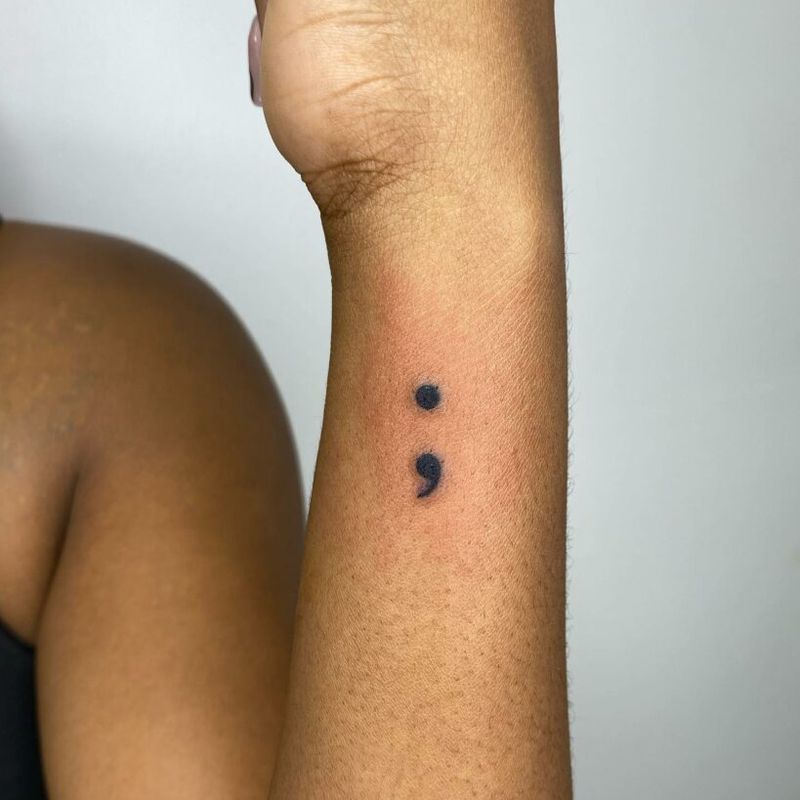
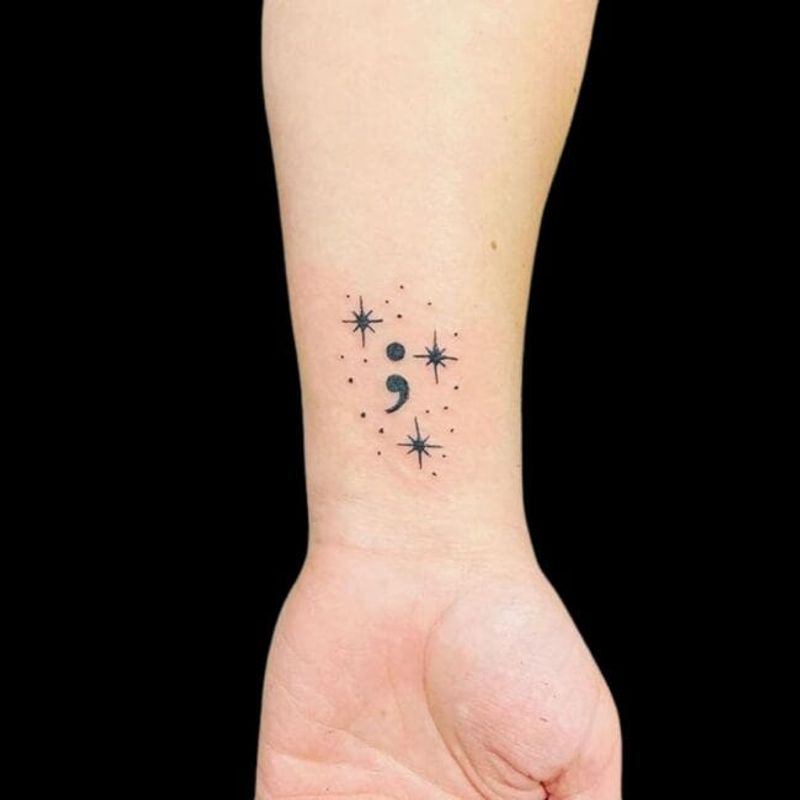
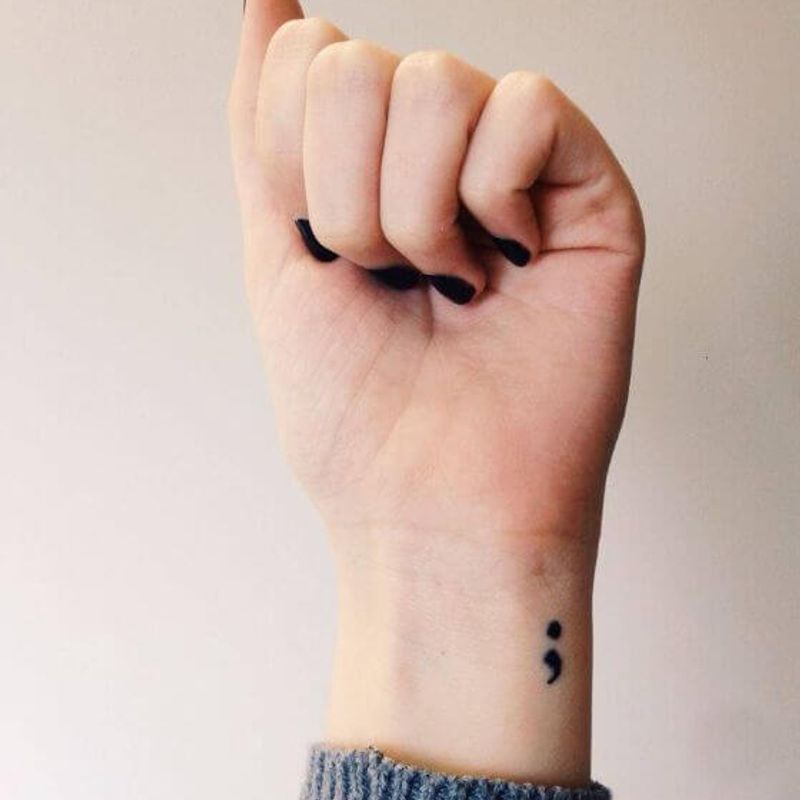
The semicolon tattoo is one of the most recognisable and emotionally charged symbols in modern tattooing. What started as a grassroots mental health campaign in 2013 has become a global movement — millions of people now wear a semicolon on their skin as a declaration that their story continues. It is small, often no larger than a coin, but it carries more meaning per square centimetre than almost any other tattoo.
In grammar, a semicolon is used when a writer could have ended a sentence but chose not to. The tattoo applies that same logic to life itself: the author is you, and the sentence is your life. Choosing to continue — through depression, anxiety, addiction, trauma, loss, or any form of mental health struggle — is what the semicolon represents. It is simultaneously personal and universal, which is why it resonates so deeply across cultures and demographics.
The movement began in 2013 when Amy Bleuel founded Project Semicolon after losing her father to suicide. The concept was simple: draw a semicolon on your wrist, take a photo, and share it on social media to show solidarity with anyone fighting mental illness, self-harm, or suicidal thoughts. The campaign exploded — within months, millions of people had participated, and what started as a drawn symbol quickly became one of the most requested tattoo designs in shops worldwide.
Bleuel herself struggled with depression, addiction, and the aftermath of abuse. She openly shared her story, which gave others permission to do the same. The semicolon became a conversation starter about mental health at a time when stigma still silenced many people. Bleuel passed away in 2017 at the age of 31, but the movement she created has outlived her — Project Semicolon continues as a nonprofit, and the tattoo remains one of the most meaningful symbols in the tattoo world.
The simplest version is a plain black semicolon — clean, minimalist, and instantly recognisable. But the design has evolved far beyond the basic punctuation mark. Semicolon butterflies are among the most popular variations, where the semicolon forms the body of a butterfly with wings extending outward, symbolising transformation through struggle. Heart semicolons replace the dot with a small heart, adding a layer of self-love to the resilience message.
Other popular combinations include semicolons integrated into flowers or vines (growth from pain), birds taking flight from a semicolon (freedom and new beginnings), infinity symbols with a semicolon woven in (ongoing strength), and cat or dog silhouettes with a semicolon tail (the healing power of animals). Some people incorporate the semicolon into meaningful quotes, song lyrics, or coordinates. Watercolour splashes behind a semicolon add visual impact while keeping the symbol central. The versatility of the design means it adapts to virtually any tattoo style — from fine line to traditional to geometric.
The inner wrist is the most iconic and popular placement for a semicolon tattoo. It is visible to the wearer throughout the day, serving as a constant personal reminder. For many people, this placement is deliberately chosen because the wrist is associated with vulnerability — putting a symbol of survival there transforms it into a statement of strength. Behind the ear is the second most popular spot, offering a balance between visibility and subtlety.
The finger (particularly the side of the index or ring finger) works well for the smallest versions. The ankle and collarbone are popular for slightly larger or more decorative variations. Some people place their semicolon over self-harm scars as an act of reclamation — covering old marks with a symbol of choosing to continue. There is no wrong placement, but the most meaningful spots tend to be ones the wearer can see and draw strength from daily.
The semicolon tattoo carries real emotional weight. If you see someone with one, do not assume you know their story or ask invasive questions about their mental health history. A simple acknowledgment — or just treating it like any other tattoo — is usually the most respectful response. For many people, the tattoo represents deeply personal experiences that they may or may not wish to discuss with strangers.
If you are considering getting one, there is no requirement to have personally experienced mental health struggles. Many people get semicolon tattoos in memory of someone they have lost, in support of a loved one, or as a general statement of solidarity. The mental health community broadly welcomes allies who wear the symbol with understanding and respect. What matters is that you know what it means and that you carry it with sincerity rather than treating it as purely aesthetic.
A basic semicolon tattoo is one of the simplest and most affordable tattoos you can get. A plain black semicolon on the wrist takes 10–15 minutes and most shops charge their minimum fee, typically between €50 and €100. More elaborate designs — semicolon butterflies, watercolour variations, or combinations with other elements — will take longer and cost accordingly, but even complex versions rarely exceed a single session.
Any competent tattoo artist can execute a clean semicolon, but for combination designs or fine-line work, look for artists who specialise in small detailed tattoos. Bring reference images of the variation you want. Many tattoo shops participate in mental health awareness events — particularly around World Suicide Prevention Day in September and Mental Health Awareness Month in May — offering semicolon tattoos at reduced rates or donating proceeds to mental health charities. These events are a great opportunity to get your tattoo while supporting the cause.
€50–€150
€150–€350
€350–€800+
See how it looks on your body with AR, get a price estimate, or find top-rated artists near you.
Browse thousands of designs and book top artists on Inkjin.



Privacy is important to us, so you have the option of disabling certain types of cookies that may not be necessary for the basic functioning of the website. Blocking cookies may impact your experience on the website.
Accept all cookies
These items are required to enable basic website functionality.
These items are used to deliver advertising that is more relevant to you and your interests.
These items allow the website to remember choices you make to give you better functionality and personal features.
These items help the website operator understand how its website performs, how visitors interact with the site, and whether there may be technical issues.